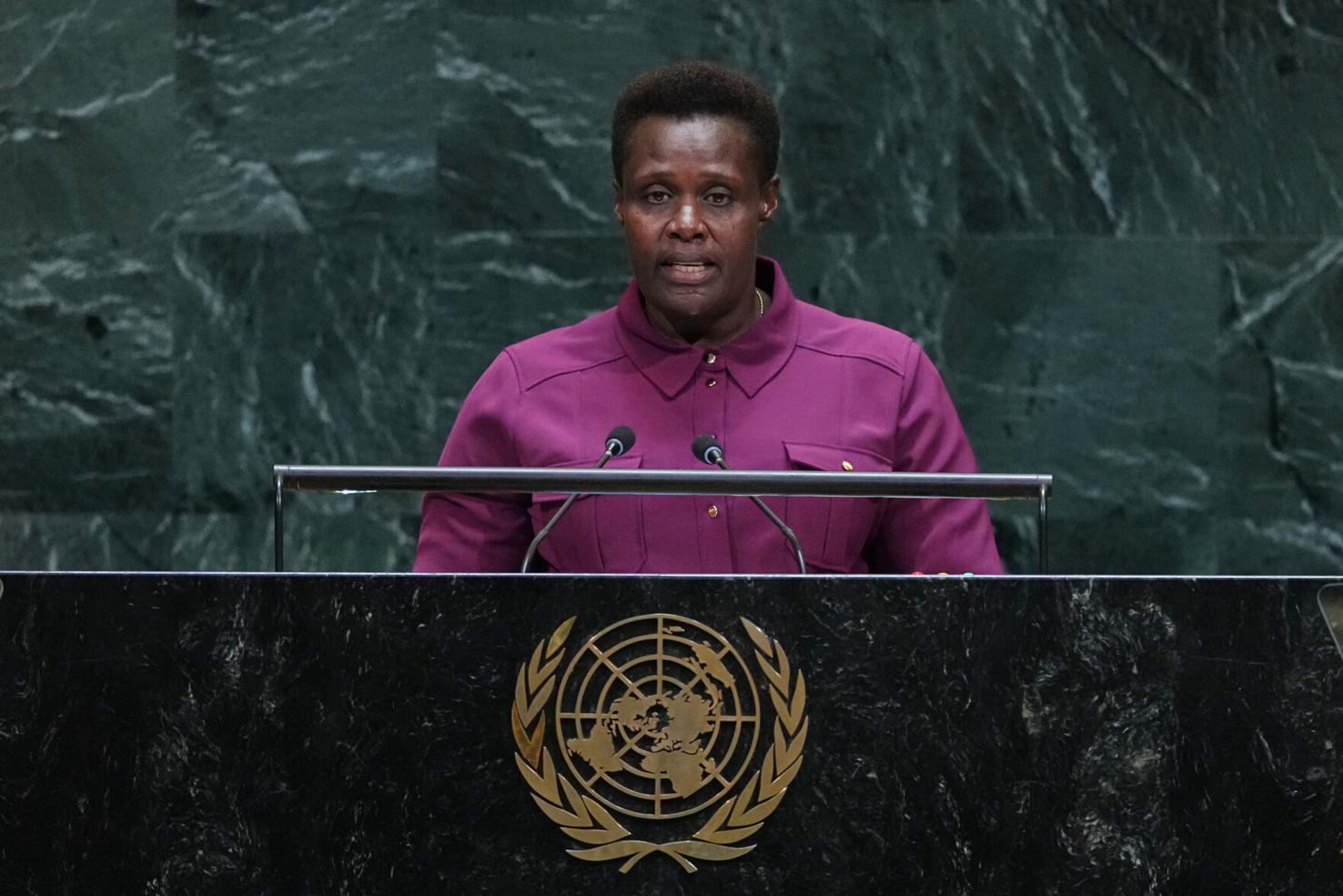

Uganda’s Vice President Jessica Rose Epel Alupo said the UN must remain agile and adapt to changing global realities, and needs comprehensive Security Council reform, including African representation in both the permanent and non-permanent member categories. She commended efforts to streamline the UN system through the UN80 initiative.
“However, these reform processes must not dilute agreed UN mandates, commitments, or programmes, nor should they impede the implementation of the 2030 Agenda,” she said.
Likewise, international financial institutions must be reformed urgently to give developing nations a stronger voice in decision-making, she said, adding that “an inclusive international tax system” is needed to curb illicit financial flows and address profit-shifting by multinational corporations.
For her country’s part “our goal is to drive double-digit growth over the five-year period and ultimately grow our economy tenfold to a GDP of $500 billion by 2040, creating jobs and enhancing the quality of life for all Ugandans,” she said, also underscoring its contributions to regional stability, notably in the Horn of Africa and the Great Lakes region.
“We are actively addressing the dual burden of communicable and non-communicable diseases,” she said, with Uganda on track to eliminate AIDS as a public health threat by 2030.
She urged development partners and multilateral institutions to help bridge financing gaps, enhance pandemic preparedness and ensure equitable access to diagnostic tools, medicines and vaccines.
Uganda, the current Chair of the Non-Alignment Movement, remains dedicated to advancing the International Covenant on the Right to Development.
It has also put forward Olara Otunnu, the first Special Representative for Children and Armed Conflict, as a candidate to become the UN’s next Secretary-General. “His extensive experience, statesmanship and proven capacity for consensus-building make him exceptionally qualified to lead the Secretariat at this critical time,” she stated.