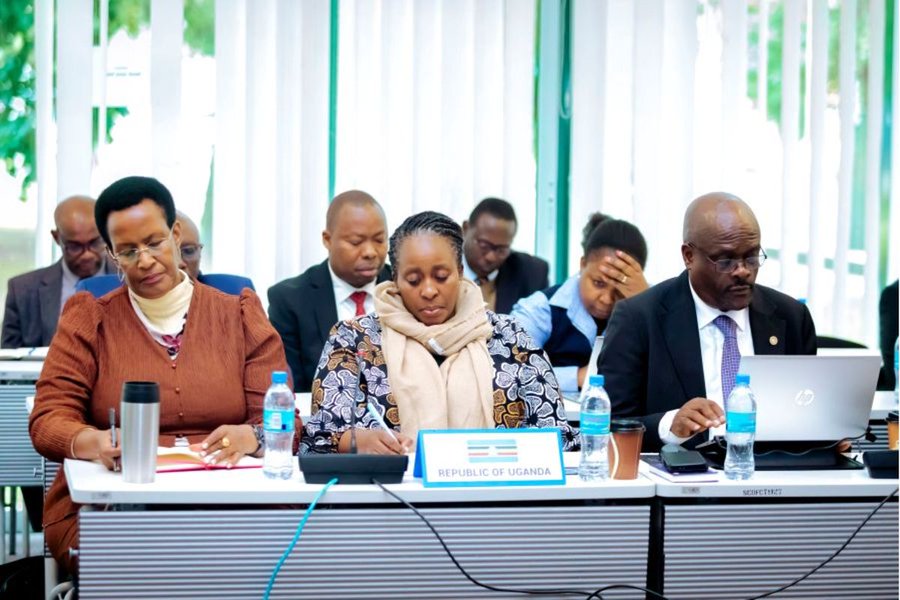

Ugandan manufacturers and exporters are poised to benefit from new regional trade reforms after East African Community (EAC) member states agreed on measures aimed at strengthening trade and accelerating industrialisation across the bloc.
A key outcome of the ministers’ meeting was a renewed commitment to eliminate non-tariff barriers and promote value addition for locally manufactured products. For Uganda, this could mean faster border clearance, lower transport costs, and easier access to markets in Kenya, Tanzania, Rwanda, Burundi, South Sudan, and the Democratic Republic of Congo.
Speaking at the meeting, EAC Secretary General Ambassador Stephen P. Mbundi noted that global trade continues to face challenges such as geopolitical tensions, disrupted shipping routes, protectionism, and supply chain weaknesses. He emphasized the need for a stronger regional market, lower business costs, and faster implementation of integration commitments, including the removal of outstanding trade barriers.
Among the most significant reforms is the harmonisation of trade documentation and expansion of electronic cargo tracking across EAC borders. The move is expected to reduce delays at key crossings such as Malaba and Busia, where duplicated paperwork and manual inspections have long slowed the movement of goods.
With reduced clearance times, Ugandan exports including maize, cement, dairy products, and steel are expected to become more competitive as transport and storage costs decline.
The Council also introduced new incentives targeting agro-processing, textiles, pharmaceuticals, and building materials. The goal is to encourage regional processing of raw materials instead of exporting them in their unprocessed form. Uganda, with its strong coffee, grain, dairy, steel, and cement industries, is well positioned to benefit from these measures.
Another major breakthrough is the push for mutual recognition of product standards. Under the proposed system, products certified by the Uganda National Bureau of Standards (UNBS) will be accepted across other EAC markets without undergoing additional testing. This will significantly reduce costs and delays for small and medium-sized manufacturers seeking regional market access.
The reforms also address one of the biggest challenges facing SMEs—access to affordable financing. A new framework will help businesses obtain regional funding and credit guarantees, enabling them to invest in equipment, expand production, and meet growing regional demand.
The EAC Secretariat has been given six months to report on progress, including border clearance improvements and the number of new industrial projects established under the incentive programme.
While implementation remains the ultimate test, the reforms represent one of the strongest commitments yet to deepen regional trade, strengthen industrialisation, and create jobs across East Africa. For Uganda’s manufacturers, they offer a promising pathway to larger markets and greater competitiveness under the “Made in Uganda” brand.