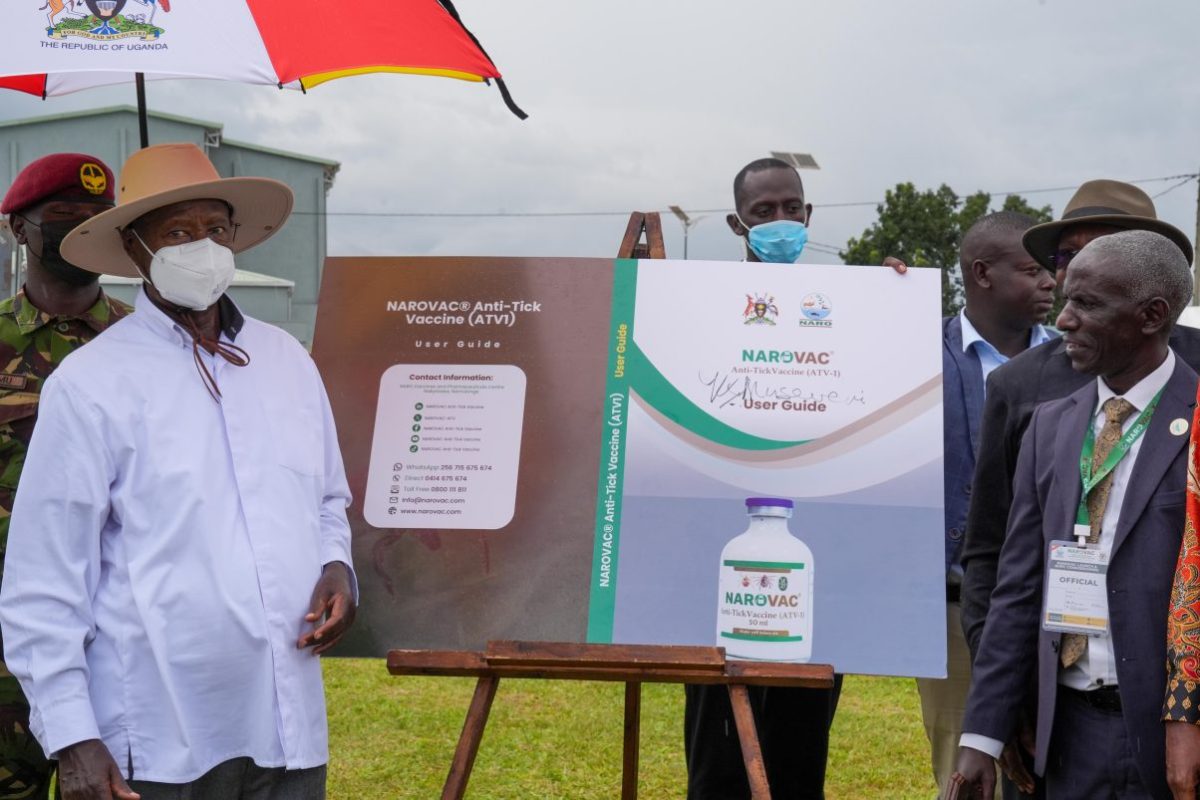

President Yoweri Museveni has proposed exempting scientists’ salaries from taxation, highlighting their critical role in driving national development. He argued that, like security personnel, scientists deserve special consideration given the impact of their work on the country’s progress.
The proposal was announced during the launch of a locally developed anti-tick vaccine at the National Livestock Resources Research Institute. Museveni noted that despite recent salary increases, scientists still lose a significant portion—up to 30%—to taxes, reducing the incentive for innovation and research.
He also pledged continued government support for scientific advancement, including funding for a proposed pharmaceutical city spearheaded by the National Agricultural Research Organisation. The initiative is expected to strengthen Uganda’s capacity to produce vaccines and reduce reliance on imports.
According to Yona Baguma, the newly launched anti-tick vaccine represents a major breakthrough for farmers and the agricultural sector. Developed through years of research beginning in 2013, the vaccine has demonstrated over 93% effectiveness against major tick species that spread deadly livestock diseases.
With the ability to produce up to 36 million doses annually, the facility has already rolled out initial supplies used in trials across dozens of districts, showing promising results in reducing tick infestations. Demand is also emerging from neighboring countries, positioning Uganda as a potential regional supplier.
Lead researcher Fredrick Kabi explained that the vaccine targets the most harmful tick species responsible for diseases such as East Coast fever, which have long undermined livestock productivity. By stimulating animals to develop natural defenses, the vaccine offers a more sustainable solution compared to overused chemical treatments.
Tick-borne diseases cost Uganda trillions of shillings annually, making this innovation a significant step toward improving food security, boosting farmer incomes, and strengthening the agricultural economy.
Together, the proposed tax relief and continued investment in research signal a broader push toward self-reliance, innovation, and recognition of science as a cornerstone of Uganda’s future development.