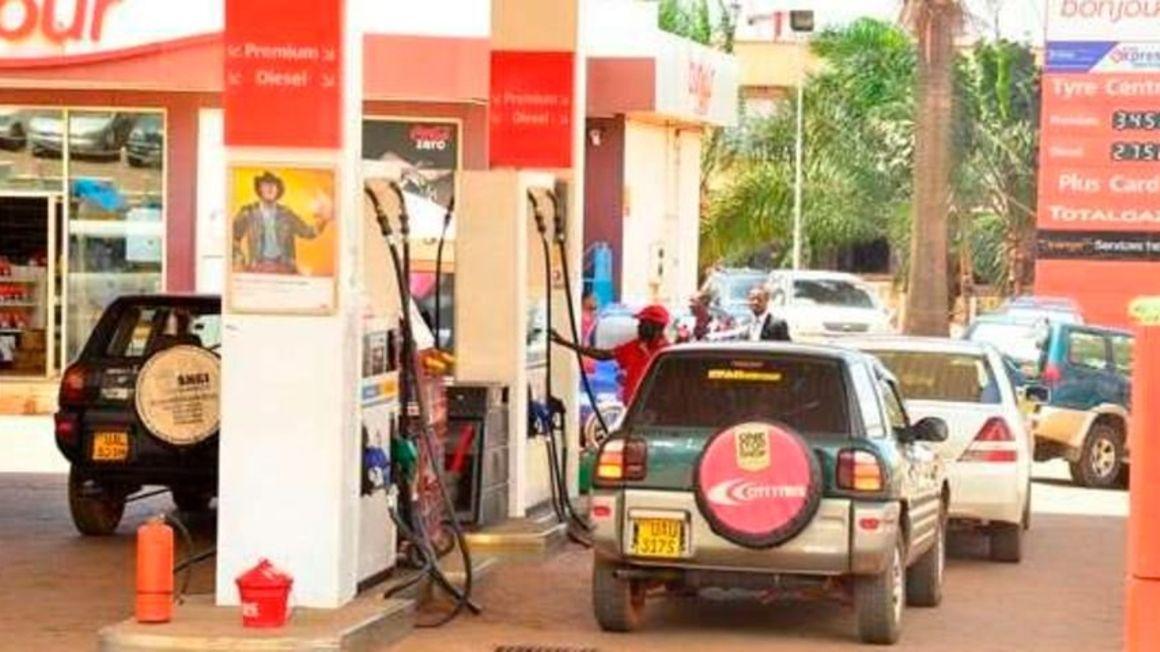

Uganda has once again emerged as the country with the lowest fuel prices in East Africa, even after fresh price hikes were announced across the region. Recent market comparisons show that motorists in Kampala continue to pay less for both petrol and diesel than drivers in Nairobi, Kigali and Dar es Salaam.
The latest adjustments followed a fuel price review by Kenya’s Energy and Petroleum Regulatory Authority (EPRA), which took effect on May 15. In Nairobi, premium petrol now sells at Kshs214.25 (about Shs6,213) per litre, while diesel costs Kshs242.92 (around Shs7,044) per litre.
Despite Kenya introducing a subsidy of Kshs14.51 per litre on diesel, the country still records the highest diesel prices among the four East African capitals surveyed. Without the subsidy, diesel prices in Kenya would have climbed even higher to Kshs257.43 per litre.
In contrast, Kampala’s pump prices remain significantly lower, with premium petrol selling at about Shs5,799 per litre and diesel at Shs5,720. Using the current exchange rate of 29 Ugandan shillings to one Kenyan shilling, this translates to roughly Kshs200 for petrol and Kshs197 for diesel.
This means fuel in Kampala is cheaper than Nairobi by approximately Kshs14 on petrol and nearly Kshs46 on diesel. In Ugandan currency, motorists save around Shs414 on petrol and Shs1,325 on diesel compared to Kenya.
Dar es Salaam also records higher prices than Kampala. Petrol in Tanzania’s commercial capital costs 4,115 Tanzanian shillings, equivalent to about Kshs206 per litre, while diesel sells at 4,248 shillings, or roughly Kshs212.
Kigali remains the most expensive city for petrol in the region, with prices standing at 2,938 Rwandan francs, translating to about Kshs259 per litre. Diesel in Kigali costs around Kshs195 per litre.
Regional fuel analyst Mr Peter Ochieng attributed Uganda’s relatively low prices to its deregulated fuel market system. According to him, Uganda allows prices to respond directly to market forces without imposing government price controls, unlike Kenya, Rwanda and Tanzania, which operate under regulated pricing models.
“The data is clear — despite Kenya’s latest price increases and subsidies, Kampala’s deregulated market continues to offer the lowest pump prices in the region,” Ochieng noted.
The comparison focused on fuel prices in Kampala, Nairobi, Kigali and Dar es Salaam, although actual prices may vary slightly across towns within each country.
Meanwhile, Kenya’s National Treasury Cabinet Secretary, Mr John Mbadi, defended the recent fuel price increases during an appearance on NTV Kenya. He dismissed claims that fuel is cheaper in Uganda and Tanzania, arguing that Kenya’s increments were smaller than those experienced by neighbouring countries.
Mbadi linked the latest adjustments to global market pressures stemming from tensions in the Gulf region involving the United States and Iran. He noted that Kenya raised super petrol prices by Kshs16.65 per litre and diesel by Kshs46.29 per litre.
He also criticised the ongoing strike by transport operators in Kenya, warning that continued disruptions could worsen the situation and reduce the government’s ability to maintain fuel subsidies.
For now, however, Kampala continues to enjoy the most affordable fuel prices in East Africa, a trend expected to remain until the next regional fuel review scheduled for June.