
President Yoweri Museveni has unveiled a comprehensive three-phase food stabilisation strategy aimed at reducing Karamoja’s recurring reliance on emergency food relief caused by prolonged drought and the effects of climate change.
The strategy will begin with the provision of climate-resilient crop varieties and livestock to households in the short term, before gradually transitioning communities to irrigation-supported farming and commercial agriculture in the medium and long term.
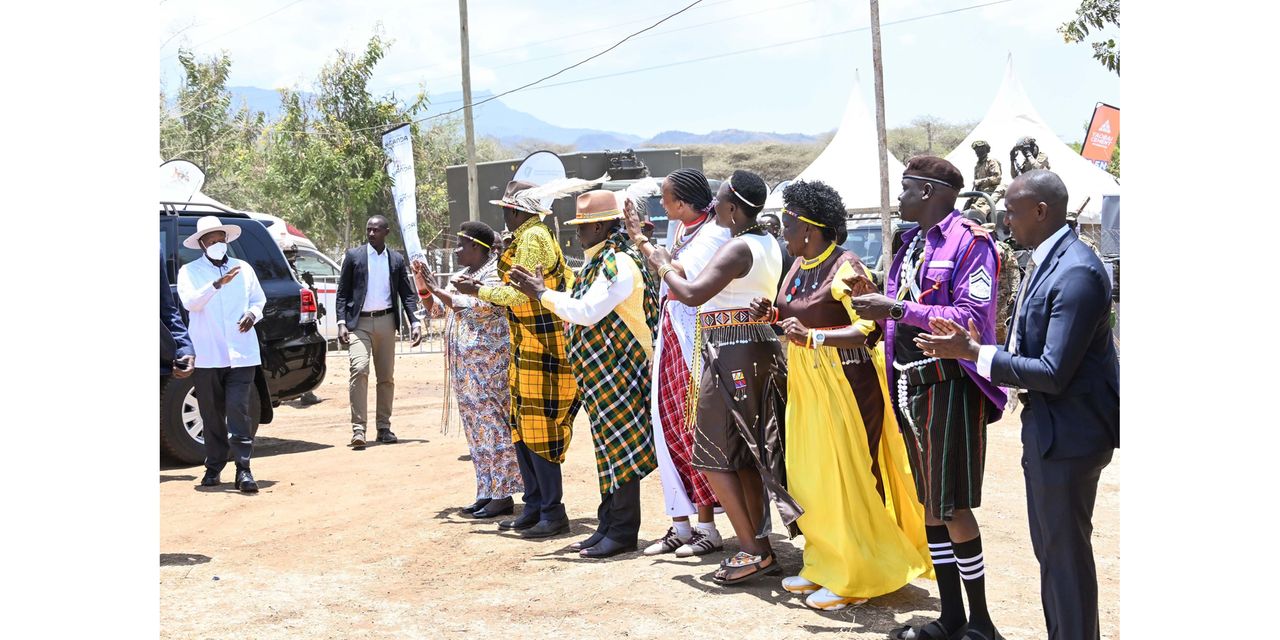
Museveni announced the plan on Wednesday while officiating at the 11th Karamoja Cultural Event held at Naitakwae Grounds in Moroto District under the theme, “Unity in Culture, Strength in Peace, Prosperity through Tourism and Natural Resources.”
The President said the initiative was developed in response to repeated droughts and changing weather patterns that have forced government to frequently provide relief assistance. He noted that government is currently distributing food relief worth approximately Shs45 billion to drought-affected areas.
Under the immediate phase, Museveni said emphasis will be placed on crops that mature quickly and can withstand Karamoja’s short and unpredictable rainy seasons. He identified sorghum, green gram and white peas as suitable crops for the region, while cautioning residents against overreliance on maize, which takes longer to mature and is less adapted to the area’s dry conditions.
To improve household incomes and food security, the President also encouraged families to engage in goat rearing and beekeeping, noting that goats can thrive on the shrubs and vegetation commonly found in Karamoja. He added that cassava and bananas could be grown in areas that receive more rainfall.
Irrigation and Commercial Agriculture
Museveni said the medium- and long-term phases of the strategy will focus on transforming households from subsistence farming to modern commercial agriculture, with irrigation playing a central role.
He announced plans for major water infrastructure projects, including the construction of large dams to support irrigation across the region.
According to the President, Karamoja has fertile land but requires reliable water systems to unlock its agricultural potential. He also warned against encroachment on wetlands, stressing that they should be preserved as critical components of the country’s water ecosystem rather than converted into farmland.
Museveni directed Karamoja Affairs Minister John Baptist Lokii to explain the Cabinet decision and oversee implementation of the three-phase programme.
Lokii welcomed the initiative, saying it would complement existing government wealth-creation programmes such as the Parish Development Model (PDM) and Emyooga. He, however, appealed for a delay in the recovery of PDM funds from beneficiaries in Karamoja, citing the severe impact of the prolonged drought on local communities.
Peace Driving Development
The President also linked Karamoja’s economic transformation to the improved security situation resulting from the disarmament programme. He revealed that government has recovered about 41,000 illegal firearms from the region.
Museveni commended women for their contribution to the initial disarmament efforts and praised individuals who helped expose cattle-rustling networks. He also acknowledged programmes aimed at helping former Karacunas abandon violence and reintegrate into society.
Vice President Jessica Alupo thanked the people of Karamoja for supporting the National Resistance Movement (NRM) in the recently concluded elections, noting that the restoration of peace had created new opportunities for development.
NRM Secretary General Richard Todwong also congratulated the region for its support and encouraged communities to leverage their cultural heritage as a tool for fighting household poverty.
Museveni further urged the Karamojong to undertake a cultural audit to identify traditions that promote development while discarding practices that hinder progress.
The week-long cultural event attracted an estimated 15,000 participants from the wider Ateker cluster, including the Karamojong, Iteso, Ethur, Ik and Tepeth communities, as well as the Turkana and Pokot of Kenya, the Toposa of South Sudan and the Nyangatom of Ethiopia.