

Uganda has officially named its crude oil blend “Pearl Sweet”, giving the country’s petroleum a unique commercial identity as it moves closer to oil production and entry into global markets.
The name was unveiled on Wednesday at the Kingfisher Development Area in Kikuube District during a ceremony attended by President Yoweri Museveni, Prime Minister Robinah Nabbanja, Energy Minister Dr. Monica Musenero, and Energy Ministry Permanent Secretary Irene Bateebe.
The name “Pearl” reflects Uganda’s reputation as the “Pearl of Africa,” while “Sweet” refers to the crude oil’s low sulphur content. In global petroleum markets, sweet crude is valued because it is easier and less costly to refine than high-sulphur crude. Uganda’s oil contains about 0.16 percent sulphur and ranges between 23 and 33 degrees API gravity. Although classified as very low in sulphur, the crude is paraffinic and waxy, requiring heating during transportation.
The Pearl Sweet brand will represent crude produced from the Kingfisher and Tilenga oilfields and transported through the East African Crude Oil Pipeline (EACOP) to Tanzania’s port of Tanga. The new identity will help traders, refiners and buyers recognize Uganda’s crude and provide a benchmark for marketing and pricing it against international oil grades.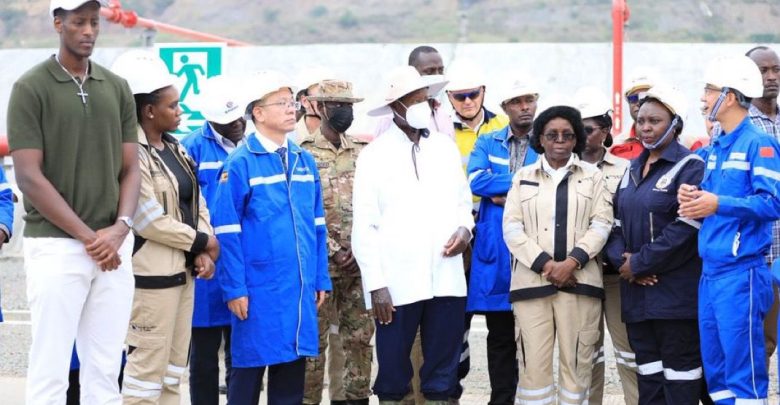
Speaking at the event, Permanent Secretary Irene Bateebe described the unveiling as a major milestone in Uganda’s decades-long petroleum journey and a sign that the sector has entered its decisive delivery phase. Uganda’s petroleum resources are estimated at 6.5 billion barrels of oil initially in place, with about 1.4 billion barrels recoverable, alongside an estimated 500 billion cubic feet of natural gas. Much of the Albertine Graben remains unexplored, leaving room for additional discoveries.
The oil sector has already generated significant economic benefits. More than 18,000 people are directly employed, with 91 percent being Ugandans and over 5,000 from host communities. Ugandan companies have secured contracts worth about $2.27 billion from the $7 billion invested so far. In addition, over 14,000 Ugandans have been trained and certified for the industry, while thousands of indirect and induced jobs have been created.
Prime Minister Nabbanja credited the petroleum programme with accelerating development in the Bunyoro sub-region, including the construction of Kabalega International Airport, the Kabalega Industrial Park, over 500 kilometres of tarmac roads and improvements to health facilities.
At the Kingfisher project, infrastructure was 99.38 percent complete by July, all required land had been secured, and 22 wells had been drilled—exceeding pre-first-oil drilling targets. The project is now transitioning from construction to testing, commissioning and operational readiness.
Pearl Sweet will be produced from the Kingfisher and Tilenga fields, jointly owned by TotalEnergies (56.67%), CNOOC (28.33%) and the Uganda National Oil Company (15%). At peak production, Kingfisher is expected to produce about 40,000 barrels per day, while Tilenga is projected to produce approximately 190,000 barrels per day, giving a combined output of 230,000 barrels daily.
While the projects have faced criticism from environmental groups over biodiversity, water resource and emissions concerns, developers maintain that affected communities have been compensated and resettled and that the projects comply with international standards. Dr. Musenero said the Pearl Sweet brand also symbolizes Uganda’s commitment to managing its petroleum resources responsibly and sustainably.
The unveiling of Pearl Sweet marks one of the final milestones before Uganda joins the ranks of commercial oil-exporting nations, nearly two decades after confirming commercially viable oil reserves in the Albertine Graben.