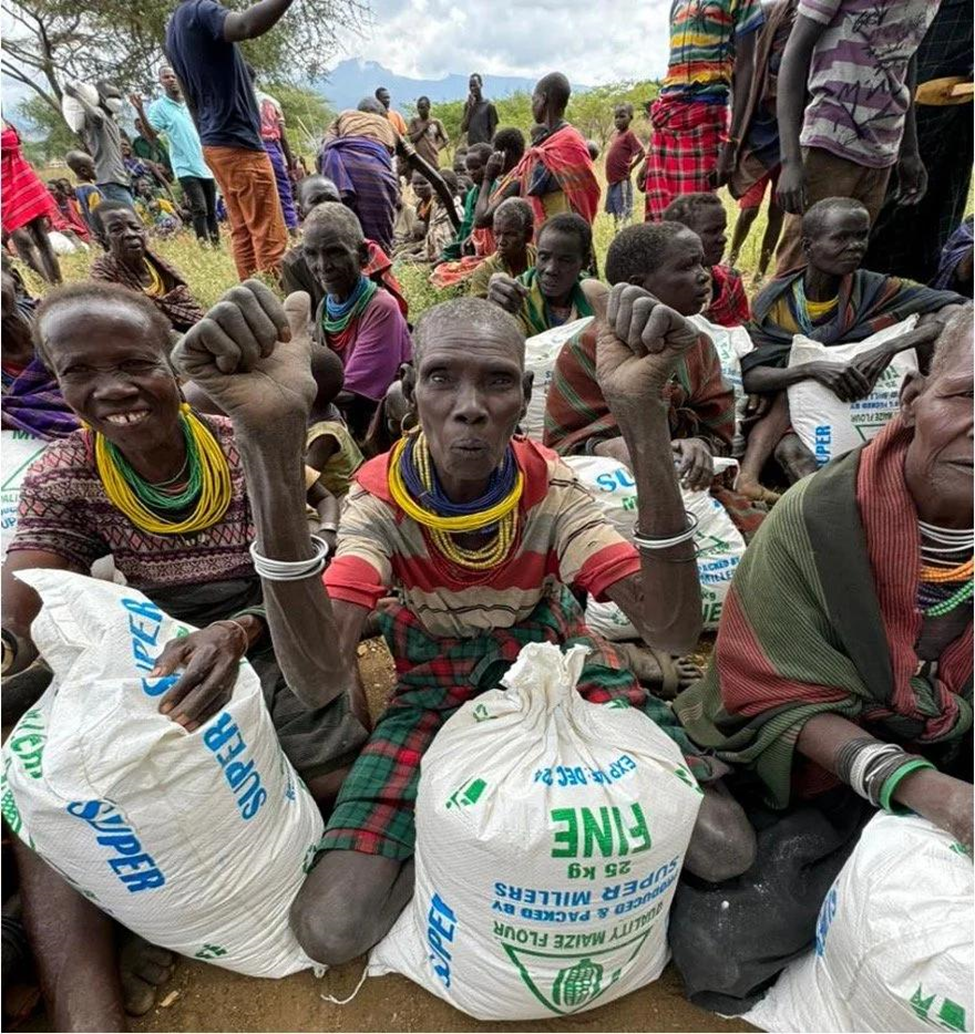

The Government has rolled out an emergency food relief operation in the Karamoja sub-region following prolonged dry conditions that have devastated crop production, triggered severe food shortages, and heightened humanitarian concerns across the region.
Karamoja remains among the worst-affected areas as several parts of Uganda continue to experience below-normal rainfall. The extended dry spell has resulted in widespread crop failure, leaving thousands of households struggling to access adequate food.
Government officials reported that 16 people are believed to have died from causes linked to food shortages, although the reports are yet to be independently verified. Authorities extended their condolences to the bereaved families and communities affected by the crisis.
As part of the emergency response, the Government on Wednesday delivered 22 tonnes of relief food to Loduku and Loyoru sub-counties in Kaabong District. The consignment included 13 tonnes of maize flour and nine tonnes of beans to provide immediate support to vulnerable households facing acute food insecurity.
The Office of the Prime Minister (OPM) has also dispatched additional emergency food supplies for distribution to the most affected districts, including Kaabong, Kotido, Amudat, Napak, and Moroto, where poor harvests caused by the prolonged drought have worsened hunger.
To strengthen the ongoing response, the OPM is expected to seek Cabinet approval on July 13 to procure more emergency food supplies for communities across the wider Karamoja sub-region and neighbouring districts.
Permanent Secretary Alex Kakooza said the Government is acting swiftly to address the worsening humanitarian situation and ensure assistance reaches those most in need.
“The Government recognises the challenges facing Ugandans affected by food shortages and is taking urgent measures to support vulnerable families during this difficult period,” Kakooza said.
He noted that the emergency food distribution is part of broader government efforts to cushion affected communities while additional relief supplies are mobilised and long-term measures to improve food security are implemented.
The intervention comes amid growing humanitarian concerns in Karamoja, where recurring droughts and climate-related shocks continue to undermine agricultural production, household incomes, and food security. Government officials say the emergency response will be complemented by sustained investments aimed at strengthening climate resilience and supporting agricultural recovery to reduce future vulnerability.