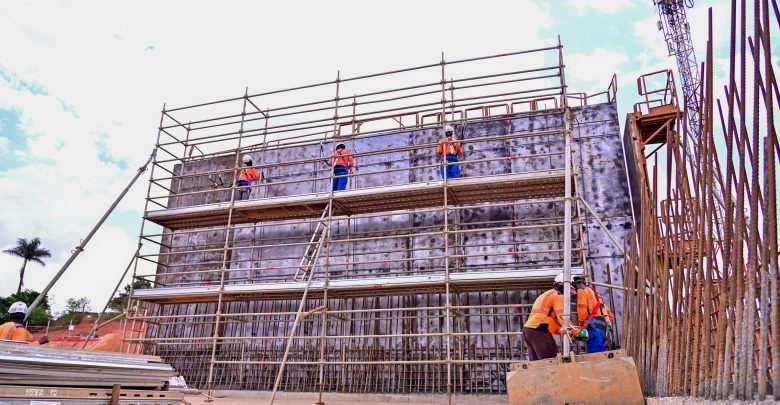

The National Water and Sewerage Corporation (NWSC) has said its Package 2B network expansion project will significantly reduce recurring water shortages across Greater Kampala by enabling the full distribution of water produced at the Katosi Water Treatment Plant.
During an inspection of the ongoing works on Wednesday, NWSC Managing Director Eng. Dr. Silver Mugisha said the project is designed to address immediate water supply challenges in rapidly growing communities while expanding capacity to meet demand projected up to 2040.
According to Mugisha, water demand in the Greater Kampala Metropolitan Area continues to rise, making timely completion of the project critical. Katosi Water Treatment Plant currently produces 160 million litres of water per day but operates at only about 52 percent of its capacity because the existing distribution network cannot transport all the treated water to consumers. The plant has the potential to increase production to 240 million litres daily.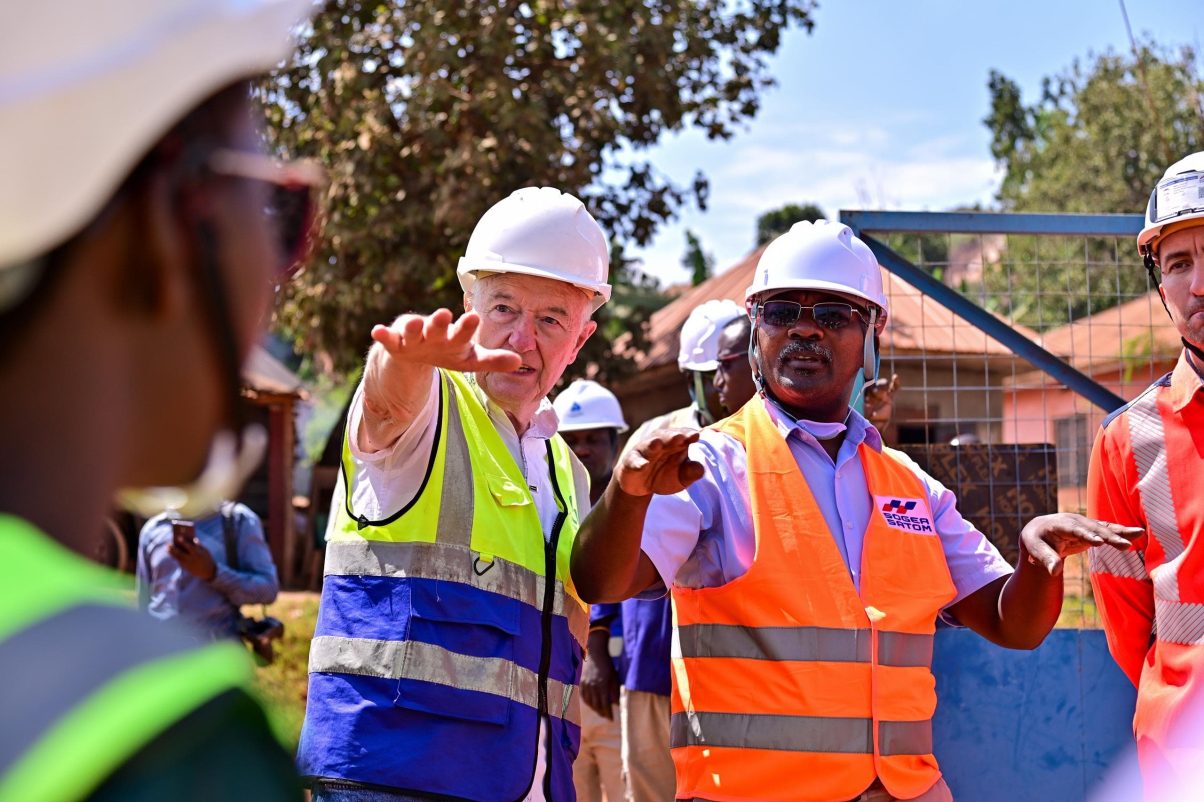
Mugisha described Package 2B as the crucial missing link in the distribution system and directed engineers to begin planning an additional evacuation line to accommodate future increases in Katosi’s output. He noted that increased supply from Katosi will also reduce pressure on the ageing Ggaba water works.
The €92.4 million project includes the installation of about 70 kilometres of transmission pipelines, construction of reservoirs at Kanyanya, Kabulengwa and Mutungo with capacities of 10 million, 3.89 million and one million litres respectively, establishment of booster stations at Kungu and Kabulengwa, and upgrades to Kampala Water’s SCADA control system.
Since construction began in February 2025, approximately 25 kilometres of pipeline have been laid. NWSC reports that the project is currently 35 percent complete, with the Kungu booster station at 70 percent, Kabulengwa booster station at 65 percent, Mutungo reservoir at 55 percent, and pipeline installation about one-third complete.
Although full completion is expected in 2027, contractor Sogea Satom plans phased handovers to allow communities to benefit from improved water supply earlier. A 7.7-kilometre pipeline connecting Namugongo, Bulindo, Nsasa, Mulawa and the Kira–Kasangati road is expected to be commissioned by December 2026, improving water access in Namugongo, Kira, Buwaate, Bulindo, Mulawa, Kasangati and surrounding areas.
Mugisha welcomed the phased commissioning approach and directed that completed sections of the network be activated immediately. He also noted progress in Nansana, Katooke and Kawempe and instructed the contractor and supervising consultant to submit an acceleration plan and quarterly progress reports. He pledged to personally inspect the project every three months. 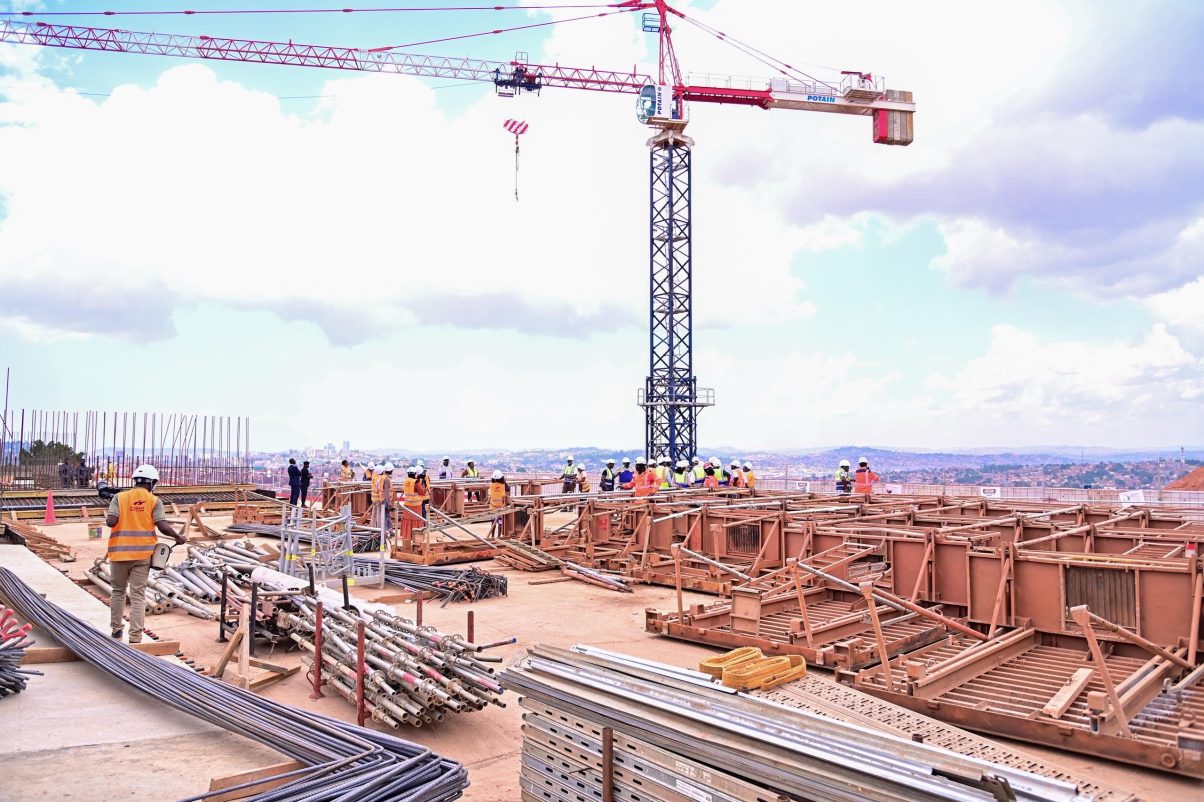
NWSC Deputy Managing Director for Technical Services Eng. Johnson Amayo emphasized the need for thorough pressure testing of pipelines to prevent future leaks and bursts, while Senior Director for Projects and Capital Development Eng. Paddy Twesigye reaffirmed the corporation’s commitment to delivering reliable water services nationwide.
Project consultant David Gaunt said the infrastructure is being designed for long-term service, with an expected lifespan of more than 50 years. NWSC Senior Director for Engineering Services Alex Gisagara added that the corporation has already trained personnel capable of operating and maintaining the new infrastructure once completed.
Formally known as the Rehabilitation, Restructuring, Rezoning and Extension of the Greater Kampala Metropolitan Area Water Supply Network Project, Package 2B is primarily financed by the French Development Agency, with additional support from the European Union, European Investment Bank and Germany’s KfW. The project is supervised by the ARTELIA–Gauff Association.
Upon completion, the expanded network will strengthen water supply across Kampala and Wakiso districts, benefiting communities including Kira, Kasangati, Gayaza, Matugga, Kawempe, Nansana, Kakiri, Kanyanya, Luteete and Wakiso Town. The investment comes at a time when rapid population growth continues to place pressure on ageing and unevenly distributed water infrastructure in the metropolitan area, which is now home to more than 5.2 million people.