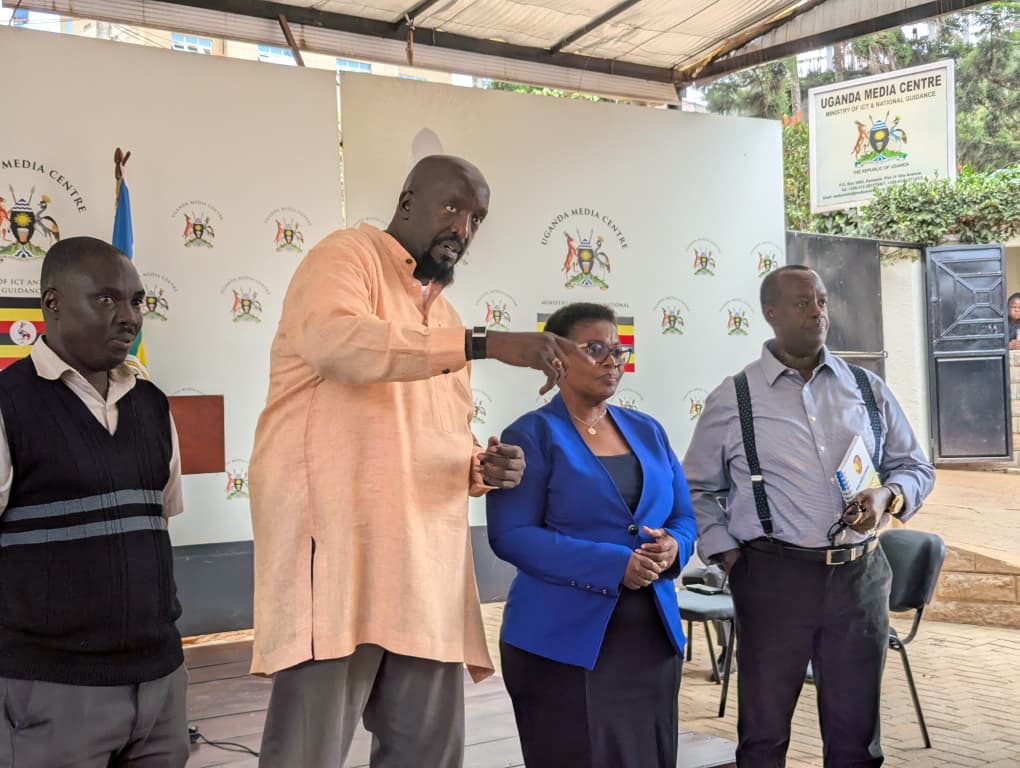

The government has officially launched Swahili Day, marking the start of a renewed nationwide campaign to promote Kiswahili as Uganda’s second national language. The initiative aims to increase the language’s use in the media, public institutions, and everyday communication while strengthening national unity and enhancing Uganda’s integration within the East African Community (EAC).
The launch took place on Tuesday at the Uganda Media Centre in Kampala, where government officials emphasized the vital role of Kiswahili in fostering regional cooperation and improving cross-border communication. Speaking during the event, Uganda Media Centre Executive Director Alan Kasujja noted that language is a key pillar of regional engagement, saying, “You can’t exist in the neighbourhood if you can’t speak their language.”
Although Kiswahili has been part of Uganda’s education system for years, officials observed that its presence in mainstream media remains limited. To address this gap, the government is encouraging media houses to incorporate Kiswahili into news broadcasts, publications, and digital content.
Kiswahili media promoter Monday Akol Amazima called on media organizations to make the language a regular feature of their programming and editorial work. He also revealed plans to introduce specialized Kiswahili training for journalists to strengthen language proficiency and enhance newsroom capacity.
The launch follows Monday’s Cabinet meeting chaired by President Yoweri Museveni, during which ministers endorsed measures to promote Kiswahili across the country. Cabinet also approved the launch of the “Sauti Ya Uganda” national competition, scheduled for Friday, which seeks to develop an official Kiswahili version of the Uganda National Anthem.
According to government officials, these initiatives are designed to improve communication with millions of Kiswahili speakers across the region, reinforce Uganda’s role within the East African Community, and encourage greater adoption of the language in public communication. Journalists and media organizations have also been urged to participate in the planned training programmes as Kiswahili becomes increasingly integrated into national discourse.