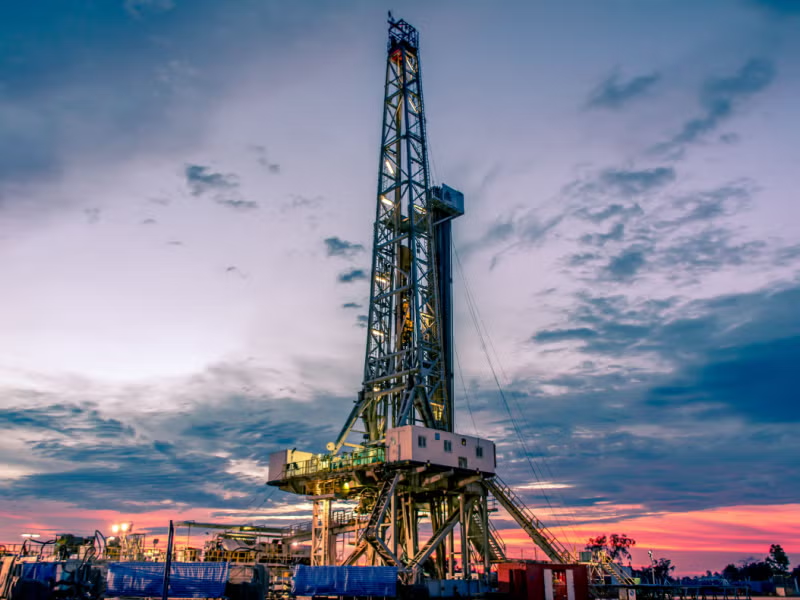

Uganda is on course to begin commercial oil production in September, marking a historic milestone nearly two decades after crude oil was first discovered in the Albertine Graben, Permanent Secretary at the Ministry of Energy and Mineral Development, Irene Bateebe, has announced.
Speaking during a retreat for Ugandan diplomats organised by the Ministry of Foreign Affairs in Kampala, Bateebe said the country’s upstream oil projects and export infrastructure are in their final stages, with first oil expected within the next two months.
“About two months from now, we should be having production into the East African Crude Oil Pipeline,” she said.
At peak production, Uganda is expected to produce 230,000 barrels of crude oil per day, comprising 190,000 barrels per day from the TotalEnergies-operated Tilenga project and 40,000 barrels per day from the CNOOC-operated Kingfisher project.
Bateebe revealed that Uganda has so far made 21 oil and gas discoveries, providing a strong resource base for commercial production. Peak output is projected to be sustained for about five years before gradually declining as additional discoveries are brought into production.
She emphasized the government’s commitment to environmentally responsible oil production, noting that associated natural gas will be utilised instead of being flared.
“We’re going to use our gas efficiently. We’re not burning it because we are very cognisant of our environment,” she said.
The 1,443-kilometre East African Crude Oil Pipeline (EACOP), which will transport Uganda’s crude oil from Hoima to the Tanzanian port of Tanga for export, is now nearly 90 percent complete. Bateebe added that the 2-million-barrel marine storage terminal at Tanga is expected to be operational within the next two months, ready to receive Uganda’s first crude oil shipments.
She called on Uganda’s diplomatic missions abroad to step up efforts to promote investment in the country’s petroleum sector, highlighting recent investment promotion missions in London, Thailand, Abu Dhabi, and Malaysia aimed at attracting investors for future exploration and development.
Bateebe also said progress is being made on Uganda’s planned 60,000-barrel-per-day refinery in Hoima. The project is being financed entirely through equity, with Alpha MBM International LLC-FZ contributing 60 percent of the funding and the Uganda National Oil Company (UNOC) providing the remaining 40 percent.
Current efforts are focused on finalising financing arrangements, engaging investors, and developing key infrastructure within the Kabalega Industrial Park, including roads, electricity, water supply, and facilities to support petrochemical industries.
Commercial oil production is expected to play a key role in Uganda’s economic transformation, with the government projecting petroleum revenues to complement agriculture, tourism, manufacturing, and mineral development under its Tenfold Growth Strategy, which seeks to grow the country’s economy to US$500 billion by 2040.