
The government has announced a significant shift in public spending, revealing that it will stop financing large-scale national celebrations beginning in the 2026/27 financial year as part of efforts to reduce recurrent expenditure and prioritize development.
Under the new policy, public funds will no longer be used to organize national events marking occasions such as International Women’s Day, Labour Day, Heroes Day, Independence Day, and other official commemorations. Instead, national addresses by President Yoweri Museveni will be delivered from State House through radio and television broadcasts.
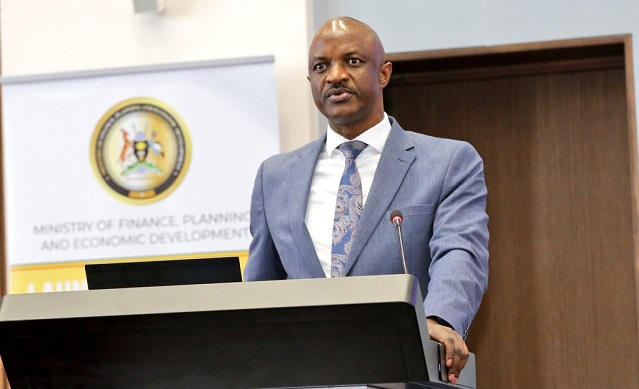
The announcement was made by Permanent Secretary and Secretary to the Treasury (PSST), Dr. Ramathan Ggoobi, who said the measure is intended to free up resources for programmes that directly contribute to economic growth and service delivery.
“We are not going to spend money organizing public functions for national celebrations. The President will communicate to Ugandans through radio and television from State House, and the resources saved will be redirected to priority government programmes,” Dr. Ggoobi said.
Resources Redirected to Development Priorities
According to the Treasury, the decision forms part of a broader expenditure rationalization strategy aimed at ensuring government spending delivers greater value for citizens. The savings generated from scaling back ceremonial events will be invested in key sectors under the country’s development agenda.
Priority areas include Agro-Industrialization, Tourism Development, Mineral-Based Industrialization, and Science, Technology and Innovation (ATMS), alongside investments in infrastructure, security, and human capital development.
Dr. Ggoobi noted that only a limited number of essential religious functions supported by government will continue receiving public funding.
A Shift from Ceremony to Productivity
For many years, Uganda has spent substantial sums on organizing national celebrations, with costs covering venue preparations, transport, accommodation, security operations, entertainment, and media coverage.
While supporters of the events argue that they promote patriotism, national identity, and unity, critics have long questioned the value of such expenditure at a time when sectors such as healthcare, education, and public service delivery face increasing financial demands.
The latest directive represents one of the government’s most notable austerity measures in recent years and reflects a growing emphasis on directing public resources toward productive investments rather than ceremonial activities.
Billions Could Be Saved Annually
Officials believe the policy could save billions of shillings each year, creating additional fiscal space to support wealth creation, job generation, industrial growth, and broader economic transformation objectives outlined under the Fourth National Development Plan.
As government tightens its spending priorities, the move signals a clear shift toward efficiency, accountability, and investment in programmes designed to deliver tangible benefits to Ugandans.